The History of Coffee
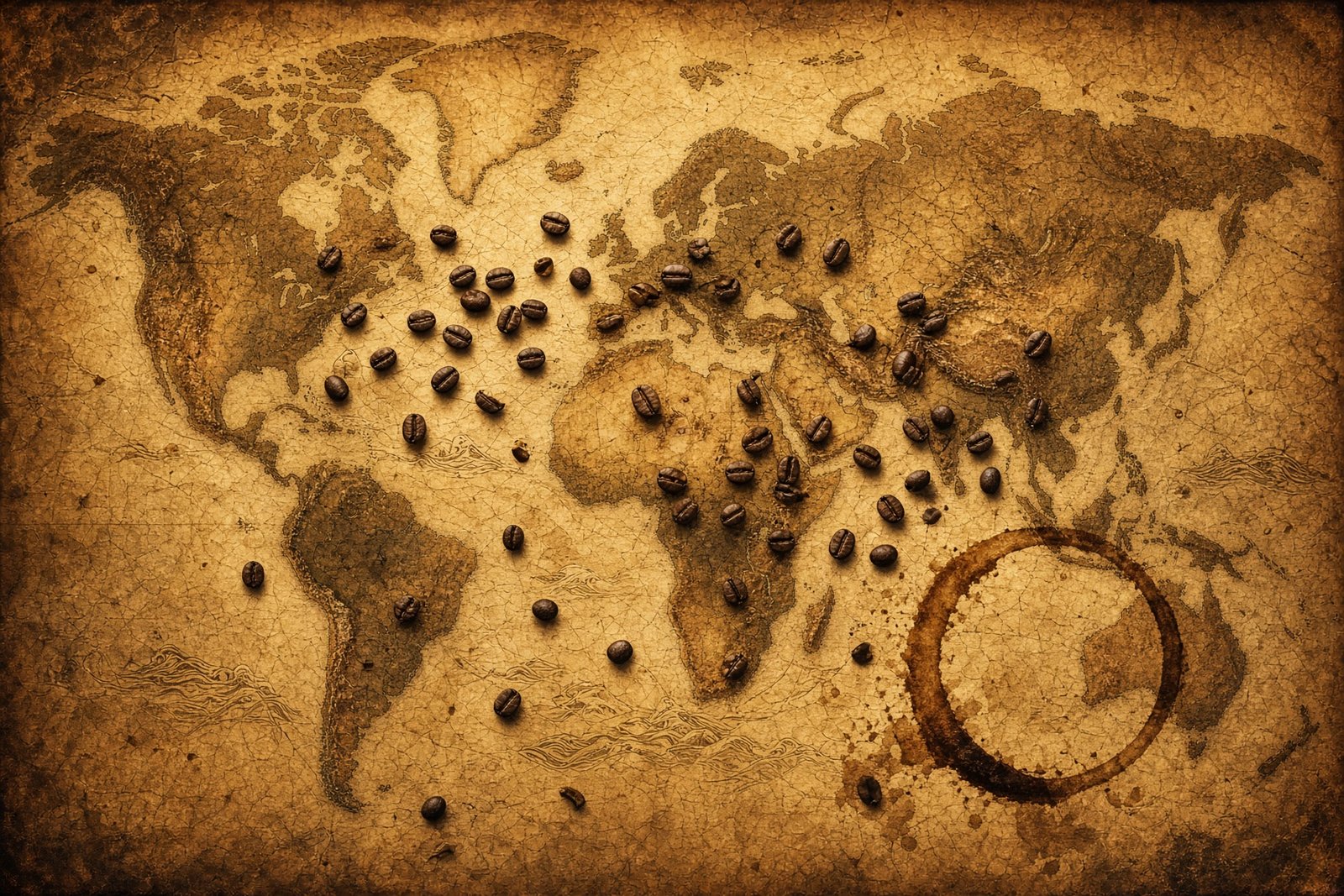
Coffee is the second most-traded commodity on earth and fuels an estimated two billion cups a day. Yet the whole story starts with a few red berries on a wild shrub in the highlands of Ethiopia. Here is how that little bean was chewed, brewed, banned, blessed, smuggled, and industrialized on its way to becoming the world's favorite drink.
Where it all began: Ethiopia
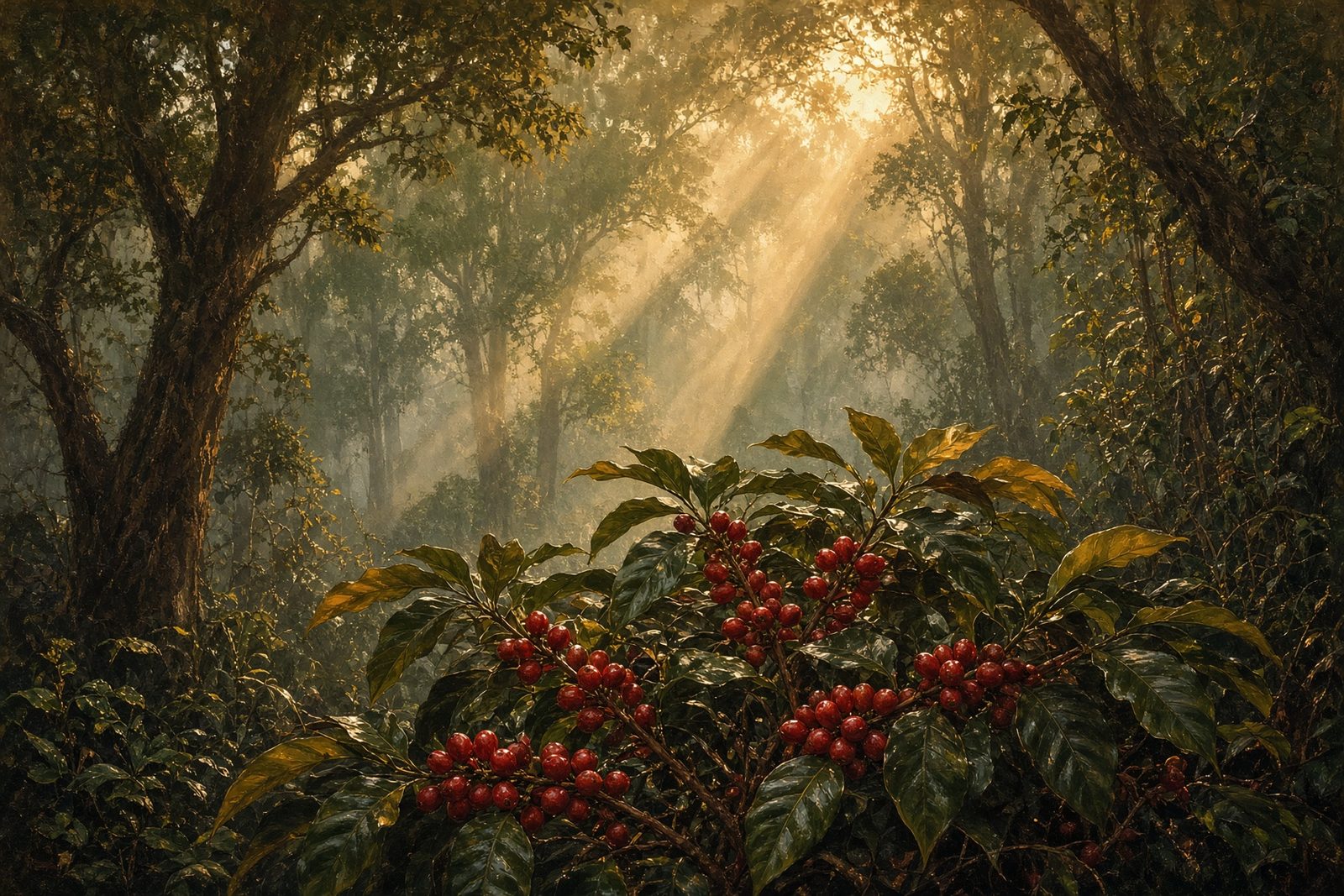
Every cup of coffee traces back to Ethiopia, where the Coffea arabica plant still grows semi-wild in the forests of the southwest. Arabica is the species behind the vast majority of specialty coffee, and Ethiopia is quite literally its home. To this day, Ethiopian coffee is prized for a delicate, floral, almost tea-like character you can taste in a good Yirgacheffe or Sidamo.
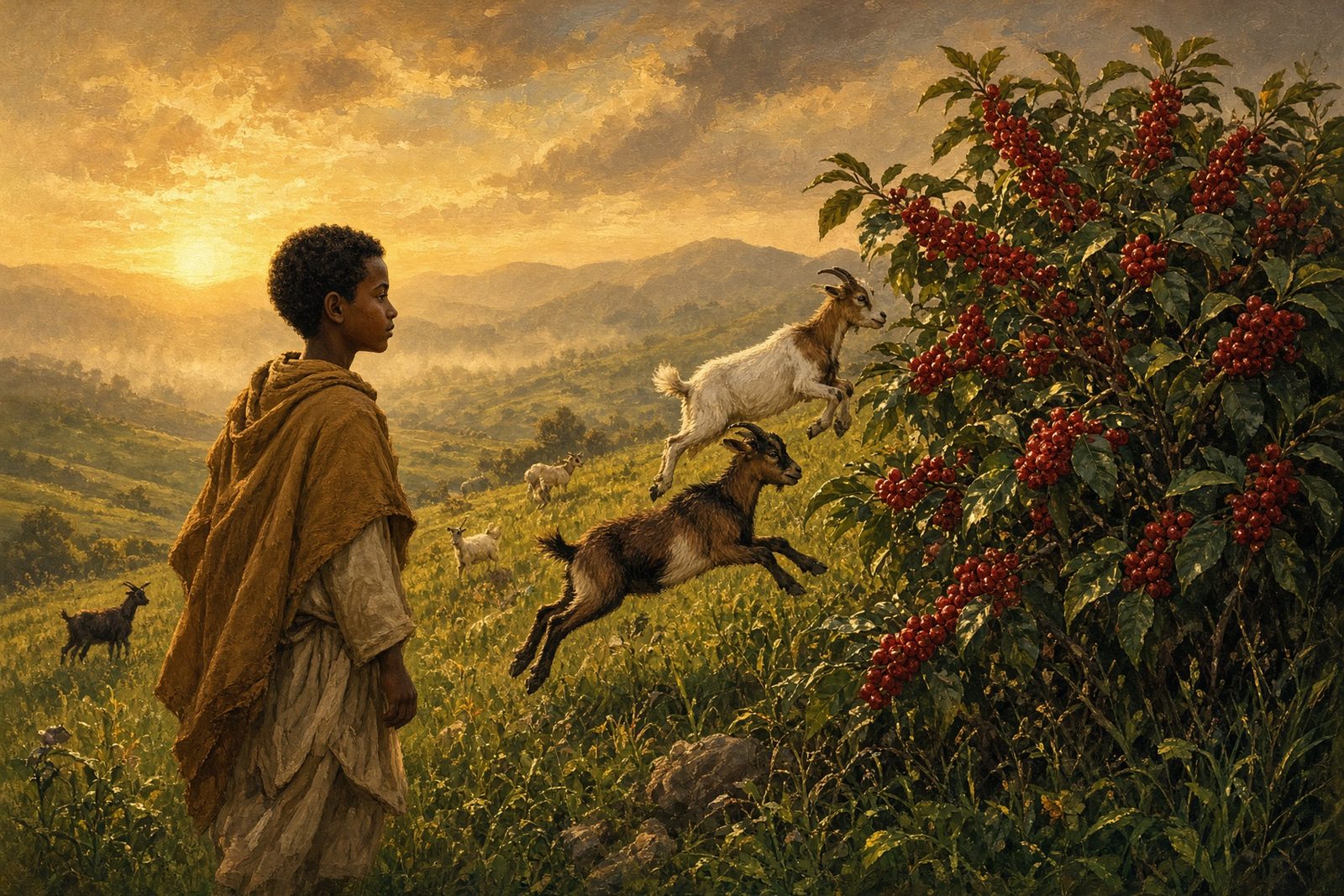
The most-told origin story belongs to a goat herder named Kaldi. As the legend goes, sometime around the 9th century, Kaldi noticed his goats becoming unusually energetic, practically dancing, after nibbling the bright red cherries of a certain shrub. Curious, he tried them himself, then carried some to a local monastery. One version has a skeptical monk tossing the beans into the fire in disapproval, only for the roasting aroma to fill the room and change his mind. The scorched beans were raked from the embers, ground, and dissolved in water, and something like the first cup of coffee was born.
It is almost certainly a myth, and the written record only picks up centuries later. But two things are not in dispute: coffee's genetic homeland is Ethiopia, and long before anyone brewed it, East African communities were eating the cherries, grinding the beans into fat and spices for energy on long journeys.
Across the Red Sea to Yemen
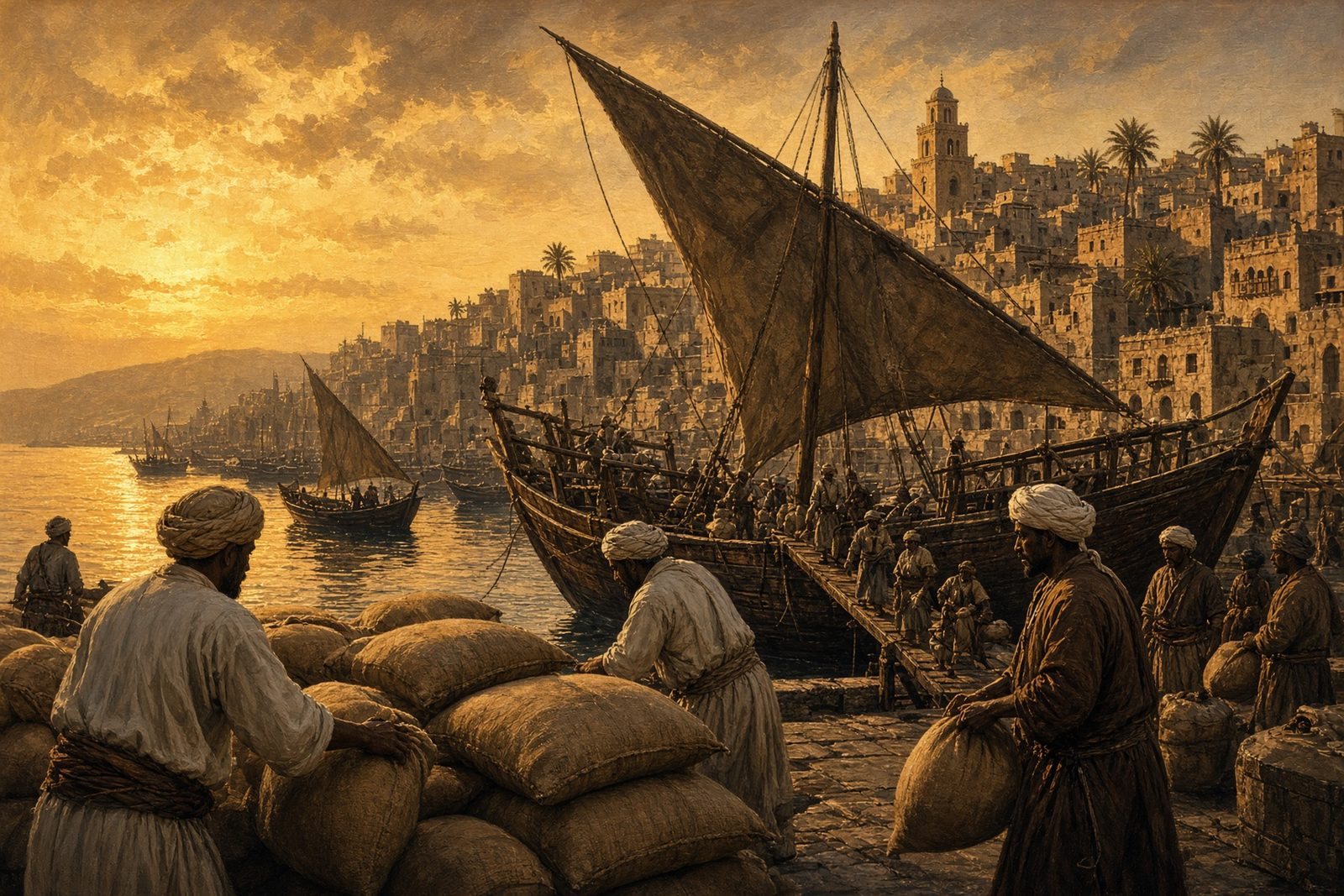
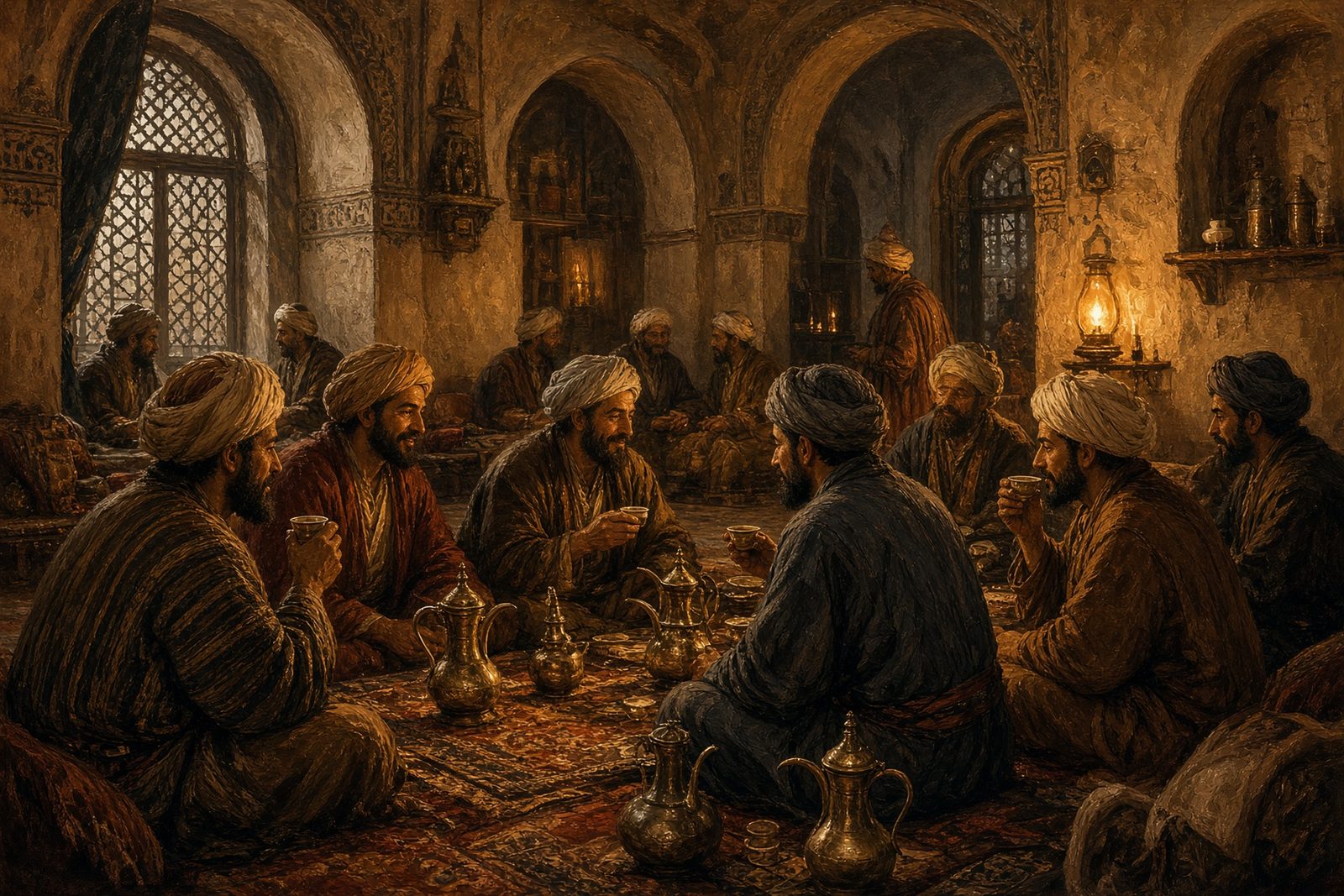
By the 15th century, coffee had crossed the Red Sea into Yemen, and this is where the drink we would recognize truly took shape. Sufi monks in Yemen brewed coffee to stay awake through long night prayers, and cultivation began in earnest in the terraced hills around the city of Mocha.
That port name stuck. Mocha became so synonymous with the coffee shipped from it that we still use the word today, even though the modern "mocha" drink, coffee with chocolate, has nothing to do with the town. For roughly two hundred years, Yemen held a near-total monopoly, and the authorities guarded it fiercely: beans could leave the country, but only after being boiled or dried so they could never be planted elsewhere.
The first coffeehouses
As coffee spread through the Arab world, so did a brand-new kind of public space: the coffeehouse. From Mecca to Cairo to Constantinople, these qahveh khaneh became social engines, places to talk, trade news, play music, and argue politics. They were nicknamed "schools of the wise" for good reason, and much of the era's information moved through them.
That influence made rulers nervous. In the early 1500s the governor of Mecca tried to ban coffee outright, fearing the free-flowing conversation it fueled, and similar bans flared up in Cairo and elsewhere. Every ban failed. Coffee was already too woven into daily life, and the prohibitions were lifted almost as fast as they were imposed. It would not be the last time an authority tried and failed to stop coffee.
Smuggled east: India and Java
Yemen's monopoly couldn't last forever. Around 1670, a pilgrim named Baba Budan is said to have left Mecca with seven fertile coffee beans strapped to his body, carrying them home to southern India. Seven was reportedly a sacred number, and those beans started the coffee farms that still produce in the hills of Karnataka today.
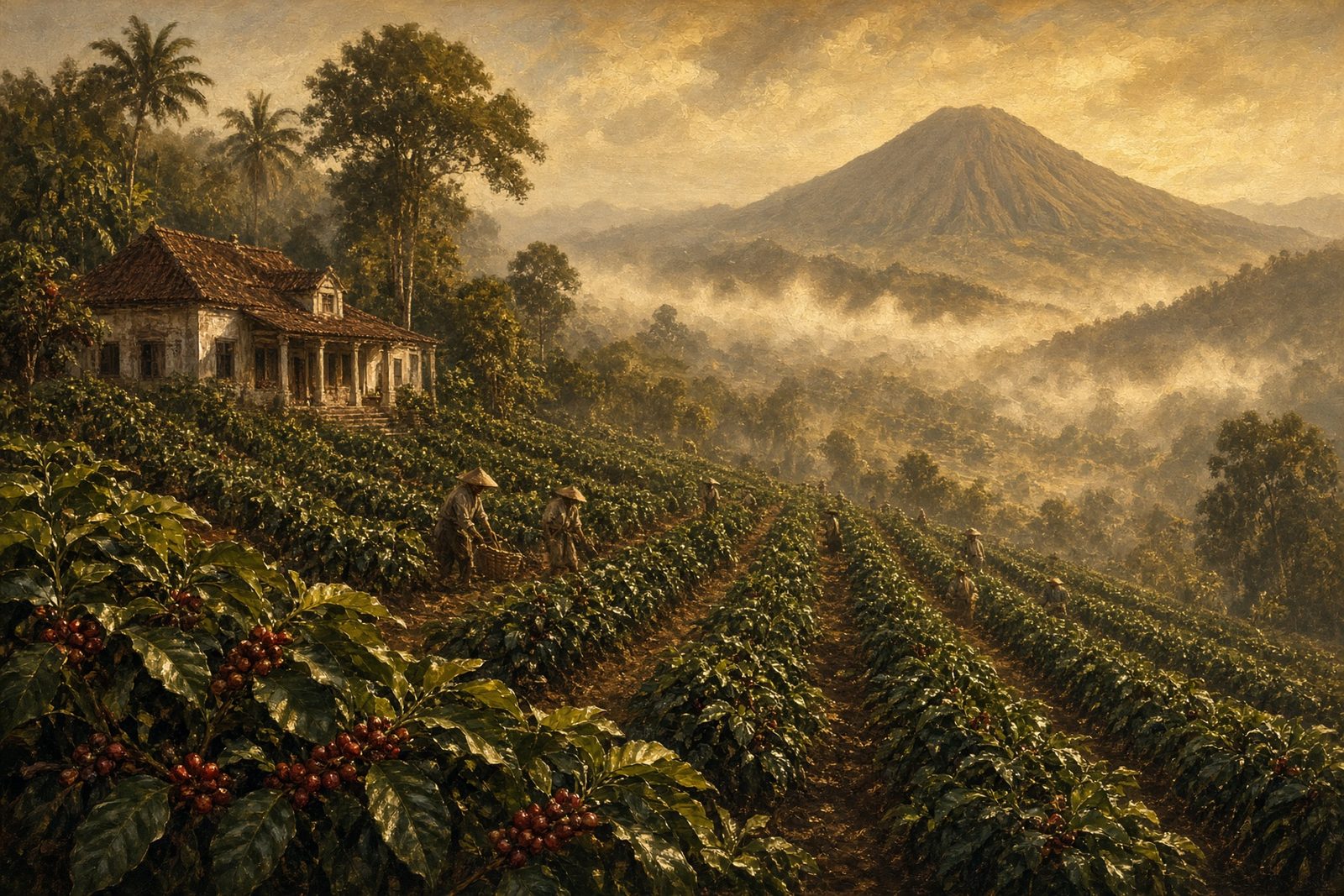
The Dutch took the next leap. After failing to grow coffee in Holland's cold, they moved cultivation to their colony on the islands of Indonesia. By the early 1700s, plantations on Java were thriving, and the island's name became yet another everyday word for coffee. From Java the plant spread to Sumatra and Sulawesi, and Indonesia became a coffee powerhouse.
Coffee conquers Europe
Coffee reached Venice through trade with the Ottoman world in the late 1500s, and Europe fell hard. When some clergy urged Pope Clement VIII to condemn this "Muslim drink," he supposedly tasted it first, and enjoyed it so much he joked that it should be baptized. Whether or not that happened, the endorsement stuck and coffee spread across the continent.
Coffeehouses multiplied through 17th-century England, France, Austria, and Germany, echoing the Arab cafes that came before. In London they were nicknamed "penny universities": for the price of a cup, you could sit for hours and soak up conversation on science, politics, and commerce. One London coffeehouse run by Edward Lloyd grew into the insurance giant Lloyd's; another Oxford coffee club helped seed what became the Royal Society. Coffee wasn't just a drink, it was infrastructure for the Enlightenment.
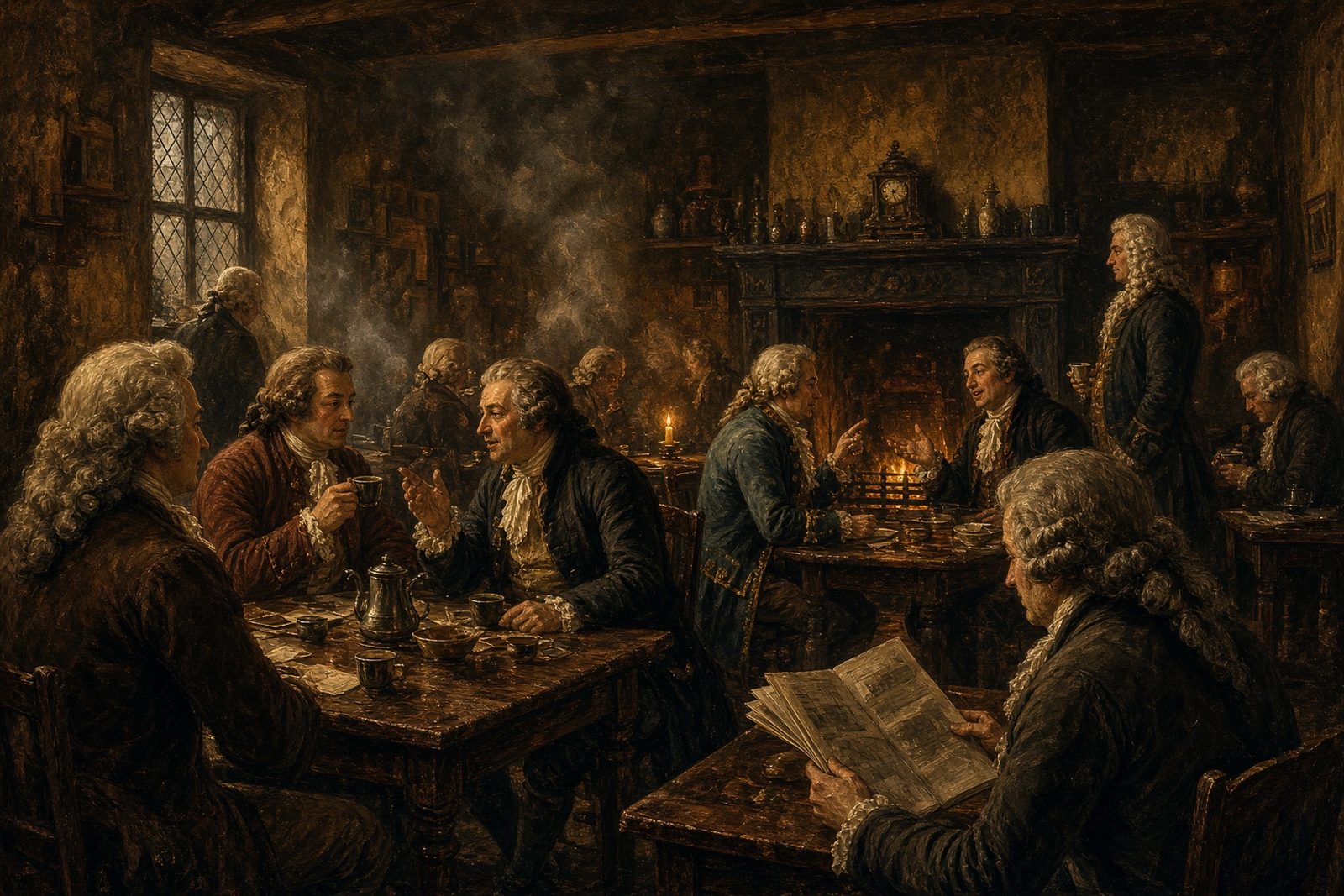
Vienna's cafe culture has its own origin story: after the Ottoman siege of 1683 was lifted, the retreating army left behind sacks of coffee beans, and one of the city's first coffeehouses opened soon after, popularizing the habit of softening the brew with milk and sugar.
Crossing into the Americas
Coffee's last frontier was the New World, and it got there thanks to one determined French naval officer. Around 1714 the Dutch gifted King Louis XIV a coffee seedling, kept under guard in the royal greenhouse in Paris. A captain named Gabriel de Clieu obtained a clipping and sailed for the Caribbean island of Martinique. Water ran short on the long voyage, and the story goes that he shared his own ration with the fragile seedling to keep it alive.
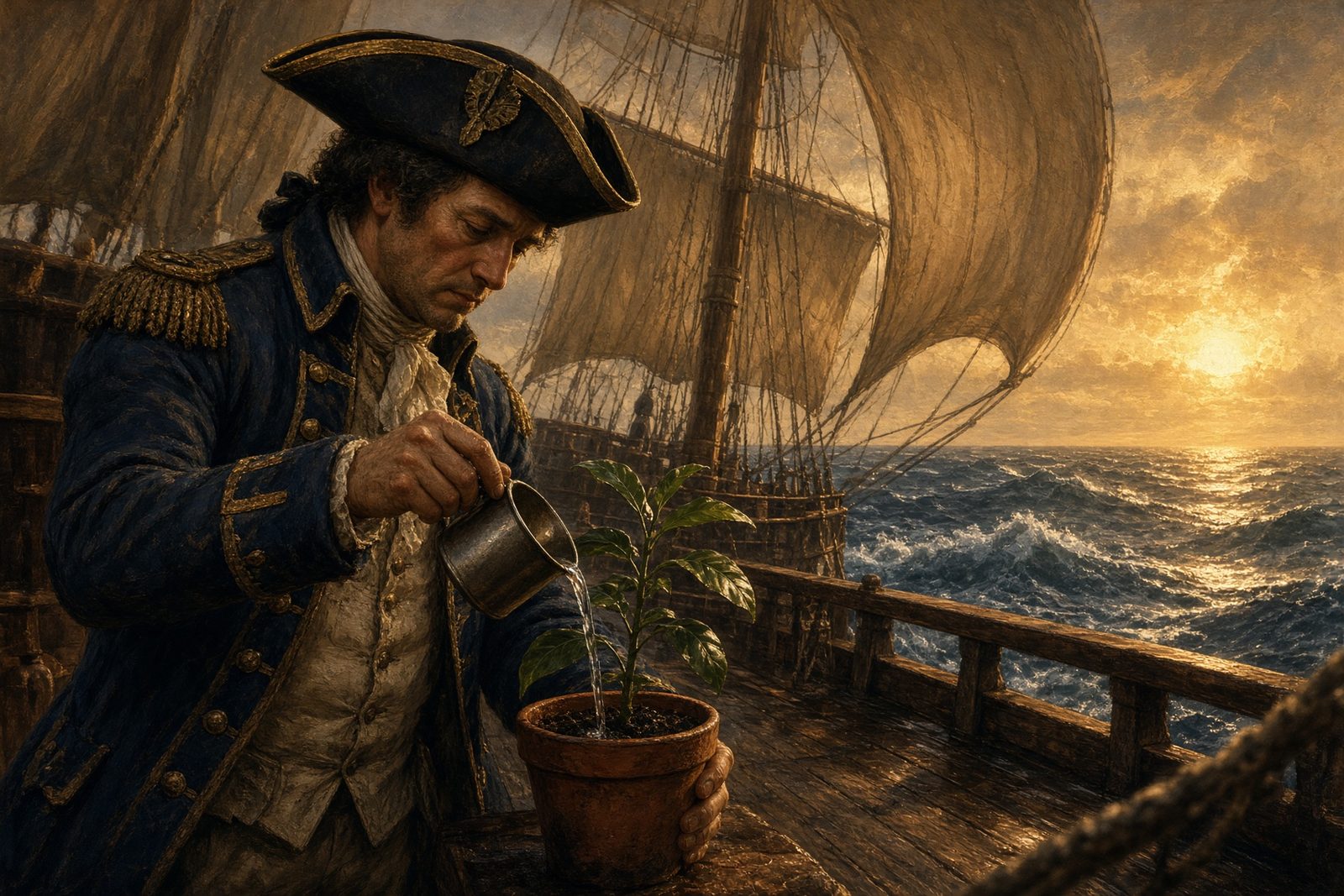
That one plant seeded the Caribbean. Within a few years, coffee spread across Martinique and on to the other islands, then into Central and South America. In 1730 the British brought coffee to Jamaica, where it climbed into the Blue Mountains and produced one of the most famous coffees in the world.
Then came Brazil. As the legend has it, a Brazilian officer named Francisco de Melo Palheta was sent to settle a border dispute in French Guiana in 1727, but his real mission was to bring coffee home. Denied seedlings officially, he charmed the governor's wife, who slipped him a bouquet with clippings hidden inside. Those cuttings founded what would become the largest coffee industry on the planet. Brazil has been the world's top producer since the mid-1800s and still is today.
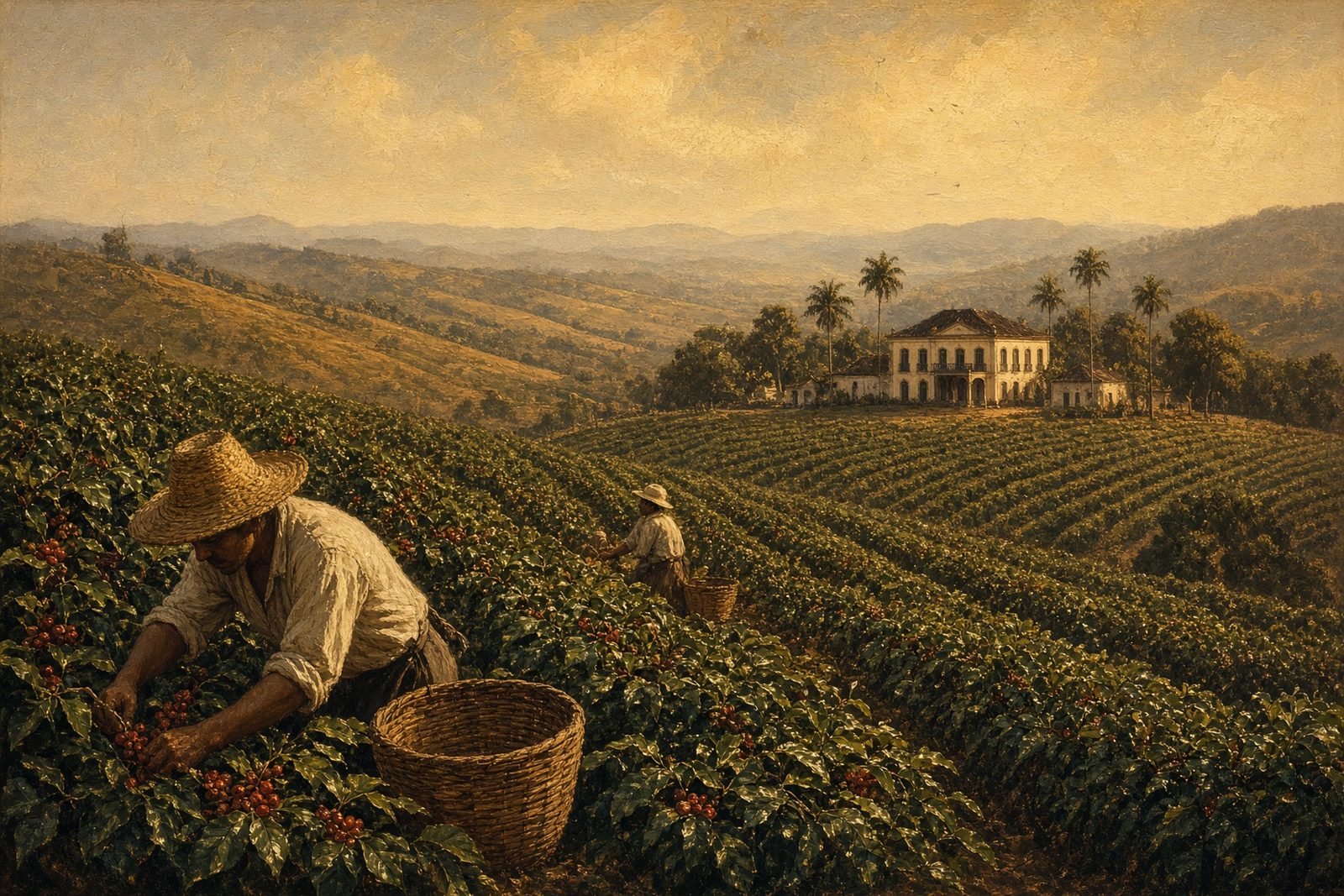
In North America, tea was king until 1773, when the Boston Tea Party turned drinking tea into an unpatriotic act. Coffee filled the cup, and the United States has been the world's biggest coffee importer ever since. Coffee even took root on American soil: seedlings reached the islands of Hawaii in the early 1800s, launching the Kona coffee legacy.
The machine age
For most of its history, coffee was brewed simply: ground, boiled, and poured. The Industrial Revolution changed all of that in a rush of invention. The percolator arrived in the early 1800s. In 1864 Jabez Burns built the first commercial roaster that didn't need to be cranked over an open flame, the ancestor of every modern roasting machine. Packaging followed, and brands like Arbuckles and, later, Maxwell House turned coffee into a mass-market product.
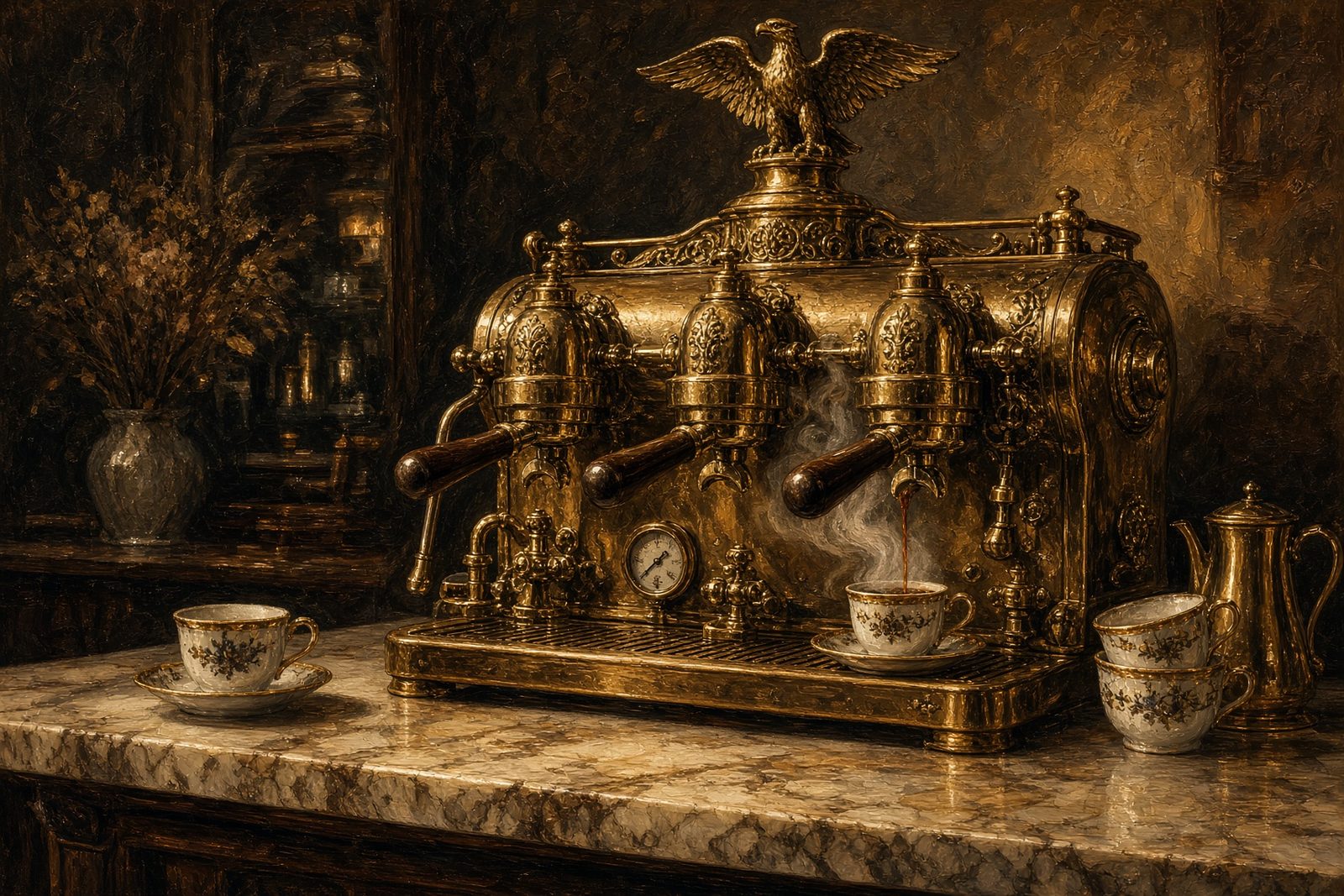
The biggest leap was espresso. In 1901 Luigi Bezzera patented a machine that forced hot water through coffee under pressure, brewing a cup in seconds so his workers could get back to the line faster. Desiderio Pavoni refined it, and in 1948 Achille Gaggia added a spring-piston lever that pushed pressure high enough to produce crema, the golden layer that defines a modern espresso. Around the same time, a German homemaker named Melitta Bentz invented the paper filter in 1908, giving us the clean, sediment-free pour-over cup. Even instant coffee has roots here, born from an effort to use up Brazil's coffee surplus.
The three waves
Coffee historians often describe the last century in three waves. The first wave was mass-market convenience: canned, pre-ground coffee in every grocery store, prioritizing availability over flavor.
The second wave was about experience and quality. It began with Alfred Peet, a Dutch-American who opened Peet's Coffee in Berkeley in 1966 and championed darker, fresher roasts. Three of his students opened a shop in Seattle in 1971 called Starbucks. A young marketer named Howard Schultz joined, fell in love with the espresso bars of Milan, and eventually reshaped Starbucks into the cafe-on-every-corner that taught the world to expect freshly roasted beans and to linger over a latte.
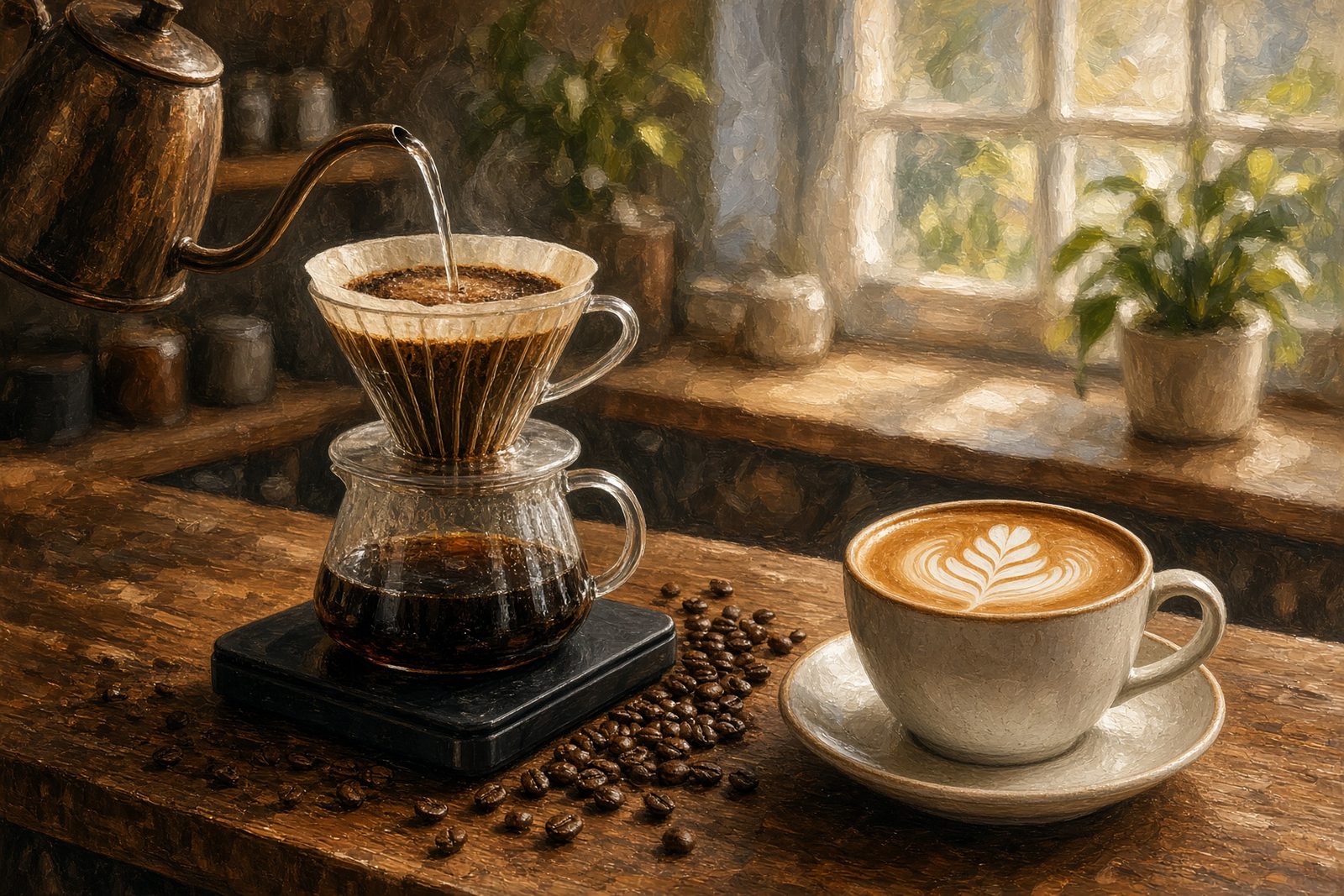
The third wave, still going strong, treats coffee as a craft product on par with wine. It obsesses over single origins, light roasts that showcase a farm's character, precise brewing, and a more direct, fairer relationship with the growers. It's the reason you can buy beans that name a specific farm and elevation, and the reason a good grinder and scale now matter as much as the machine. If you want to taste it for yourself, a specialty subscription is the easiest way in.
Coffee's legacy today
From a wild shrub in Ethiopia to roughly two billion cups a day, coffee has quite literally reshaped economies, sparked revolutions of conversation, and built cultures around a single warm cup. It has been banned by kings and blessed by popes, smuggled across oceans and industrialized in factories, and it is still evolving, as growers, roasters, and home brewers keep chasing a better cup.
That's the best part of the story: you're in it. Every time you weigh out your dose and dial in a brew, you're the latest link in a chain that runs back more than a thousand years. Not bad for a berry a goat found first.
Taste a piece of the story
The most direct way to experience coffee's origins is to brew single-origin beans from the places in this article, from Ethiopian naturals to Brazilian classics.
Explore coffee origins →Best coffee subscriptions →Sources & further reading
- The World Bank, "In Kaldi's Footsteps: A Journey to the Birthplace of Coffee."
- The Royal Society, "History of the Royal Society."
- National Coffee Association, "The History of Coffee."